IVF WITH DONOR EGGS OR SPERM
In vitro fertilization with donated eggs is an alternative when women have difficulties with their own eggs, for example: advanced age, premature ovarian insufficiency, previous surgery to remove the ovaries, genetic diseases that may affect offspring and cannot be prevented with other techniques, or multiple failures with their own eggs in IVF.

In vitro fertilization with donated sperm is an alternative for couples in which the man has difficulties producing sperm (azoospermia) or for achieving pregnancy in female same-sex couples.
When opting for gamete donation (eggs or sperm), the process is similar to that of conventional in vitro fertilization.
Gamete retrieval and fertilization
Eggs or sperm are obtained from a donor and combined with the partner’s eggs or sperm (depending on the case) to form embryos.
Embryo transfer
Subsequently, an embryo is transferred to the uterus via the vaginal route, hoping it will implant, that is, attach to the endometrium and develop into a pregnancy.
Preservation of additional embryos
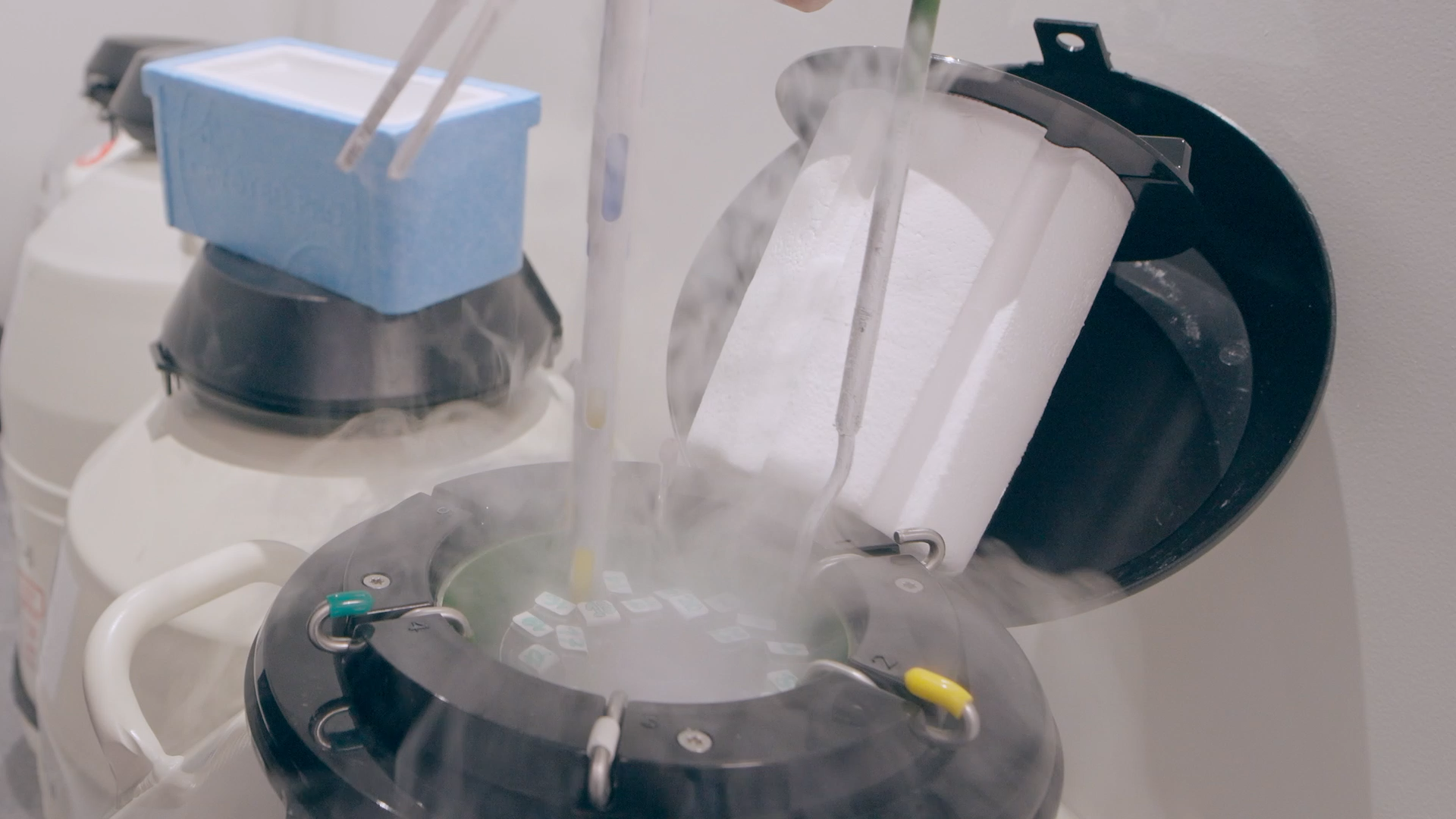
Any additional embryos produced during this process are cryopreserved, with the possibility of using them later for a new transfer.
We believe in your desire to build a family,and we’re here to make it possible.
Frequently Asked Questions
about IVF with donated eggs or sperm
1. When is in vitro fertilization with donated eggs recommended?
It is recommended when a woman has difficulties with her own eggs, such as advanced age, premature ovarian insufficiency, ovary removal, genetic diseases, or multiple failures in previous IVF attempts.
2. In which cases is donated sperm used for IVF?
When the man does not produce sperm (azoospermia) or in female same-sex couples who wish to achieve pregnancy.
3. What is the process of IVF with donated gametes?
It is similar to conventional IVF: the donor gametes are obtained, fertilized, and embryos are created, which are then transferred to the uterus via the vaginal route.
4. What happens to embryos that are not transferred in the first attempt?
Additional embryos can be cryopreserved for future transfers.
5. What is expected after transferring the embryo to the uterus?
The embryo is expected to implant in the endometrium, initiating a pregnancy.
We will contact you soon